
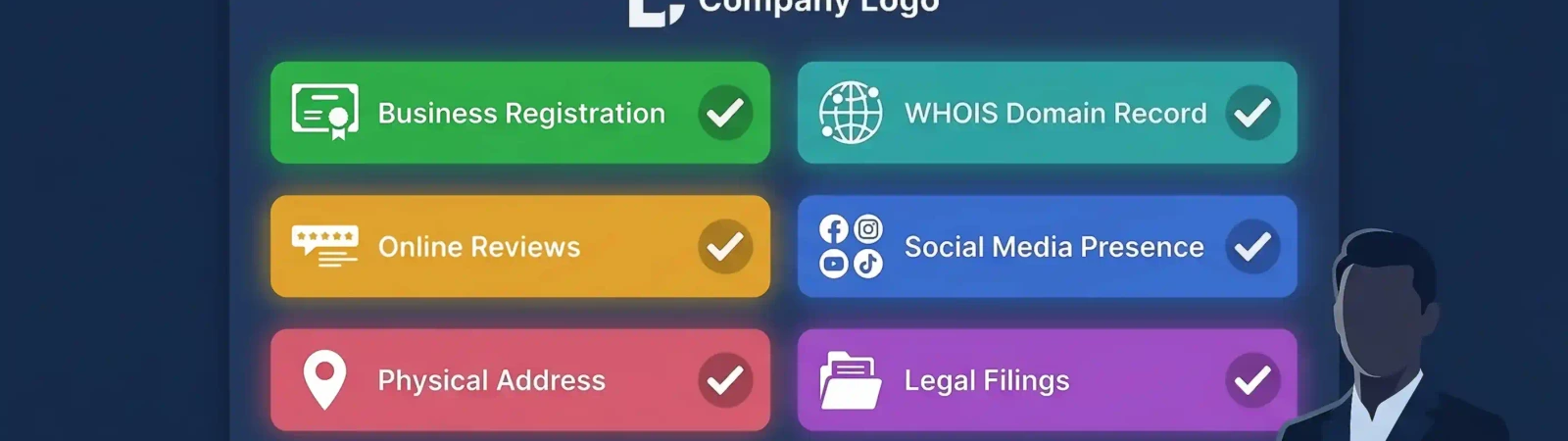
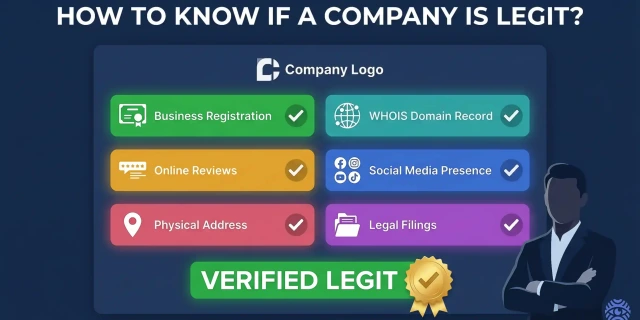
It is your responsibility to check if a certain business is legit before establishing any work liaisons with it. In the age of advanced technology, both employers and employees can easily lie about their expertise and background, as well as forge any documentation. That’s why companies tend to look up key factors in employee background checks before making an offer. In turn, a candidate should check the legitimacy of a firm using publicly available info to protect themselves from fraud. Molfar and Minos share the most useful tips and tricks you should employ to check a business before making any commitments.
Why Do People Establish Fake Businesses?
The scammers may pursue different goals when it comes to creating a fake company. Some popular reasons are:
- Fraud. They intend to steal money from investors, customers, or banks through schemes and loans. Hence, the employees become entangled in criminal activity.
- Money Laundering. Here, the purpose is to create a legitimate facade to justify funds gained through dubious means.
- Employment Scams. The goal is to get info from job seekers to then sell it or use it in illegal schemes.
- Identity Theft. The company intends to steal the personal or financial info of the clients.
- Phishing. Scammers create fake business websites to steal login credentials, credit card details, or sensitive company data.
- Tax Avoidance. The company may intend to hide income, avoid taxes, or exploit tax loopholes.
- Fake Goods. The business might aim to trick the customers into buying things that don’t meet the description. Otherwise, the firm might take money without shipping the goods.
What Are the Most Popular Types of Fake Businesses?
You should be especially careful to verify business in case they operate in such fields as:
- E-Commerce. It is easy to create a fake website or a marketplace listing in order to scam gullible shoppers.
- Financial Services. A popular scheme is to create loan services in order to steal the personal or banking info of the clients.
- Recruitment Agencies. Oftentimes, fraudulent job agencies charge fees for fake job opportunities or collect personal data for identity theft.
- Consulting. The scammers might claim they can help you with business, coaching, investment, etc., but in reality, they have no real expertise or credentials.
- Dating. Romance scams are a popular way for scammers to get the victims’ money through upfront fees.
- Charity. A business might collect money for allegedly charitable causes but then embezzle it.
Signs That a Business Is Fake
You should always ask yourself, is this a real company before giving up any information or resources. Here are some sure signs you are dealing with a sketchy company:
- The company lacks a physical address, official website, or business registration details that you would be able to verify.
- Different business names in emails, invoices, or on the website.
- The firm pressures you to quickly accept a work offer and/or promises conditions that sound too good to be true. For example, you should be sure to verify business that claims to pay much more than a market average.
- The job responsibility details are vague or in any other way suspicious. For instance, the firm might say that they need to hire a secretary, but the job description includes things like handling financial transactions, recruiting new employees, or purchasing cryptocurrency.
- The firm avoids clearly stating in what market it operates or tries to hide company details.
Methods to Research a Company
Make sure you partner with a legitimate business rather than scammers with the help of simple OSINT strategies available to amateurs. Start with the official business registry of the company’s country, and check the company with a few methods at once to yield the best results.
How to Verify a Business With Minos
A further way is to order a company check from Minos Research: a Molfar analyst examines the questions included in the selected package and verifies the findings that could affect the relationship.
- Check Sanctions Exposure. Minos Profiler can surface available sanctions indicators, legal flags, finance or blockchain records, and other findings about a person that may require closer attention. Minos Research helps verify whether a vendor, partner, or investment target carries hidden exposure before the organization commits.
- Check Identity. Minos Profiler checks a broad set of public and commercially available sources, reducing the need to repeat the same search across separate tools. Use it to verify the company representatives.
How to Verify a Business on Google
Even a simple Google search can reveal attention-worthy details about the company. Just insert the company name in a search bar to check the reviews, scammer lists, social media posts, etc., where a firm can be featured. Use quotation marks to get the most accurate results, e.g., “Company Name.” Also, include keywords like “scams,” “scammer,” “fraud,” “reputation,” etc. to filter the findings.
How to Verify a Business on LinkedIn
Another simple strategy for the company’s legitimacy check is to do a LinkedIn profile deep dive. It is common for trustworthy firms to have a professional social media presence, especially on specialized websites. Do a background check on people listed as company employees. Do they have a credible past employment track record? Have they worked for the sketchy firms before? Do their credentials match their current positions? If only one or two people are associated with the business, it may be fake. Also, a real company would likely have posts about business milestones, partnerships, shoutouts, etc. Past and present employees often engage with their company’s posts or leave comments. If there’s no employee interaction, the business could be fake.
The Bottom Line
All things considered, you don’t have to have an advanced OSINT background to check a suspicious business. Just use automated tools, employ free resources, and pay attention to warning signs so you don’t get scammed.

This Signal Sits Inside the Minos Workflow
Watch
Detects relevant activity across configured sources and preserves the original evidence.
Explore →Risk
Assesses how serious the signal is and identifies what requires attention first.
Explore →Investigate
Uses Minos Profiler to quickly build a structured identity and risk profile from a known identifier.
Explore →Research
Adds analyst-led investigation when the available information is not enough to answer the wider question.
Explore →Response
Coordinates response plans with clear ownership, timing, and execution tracking.
Explore →See what Minos surfaces in your own information space
A 30-minute briefing on your own risk landscape — no slides, real data.