
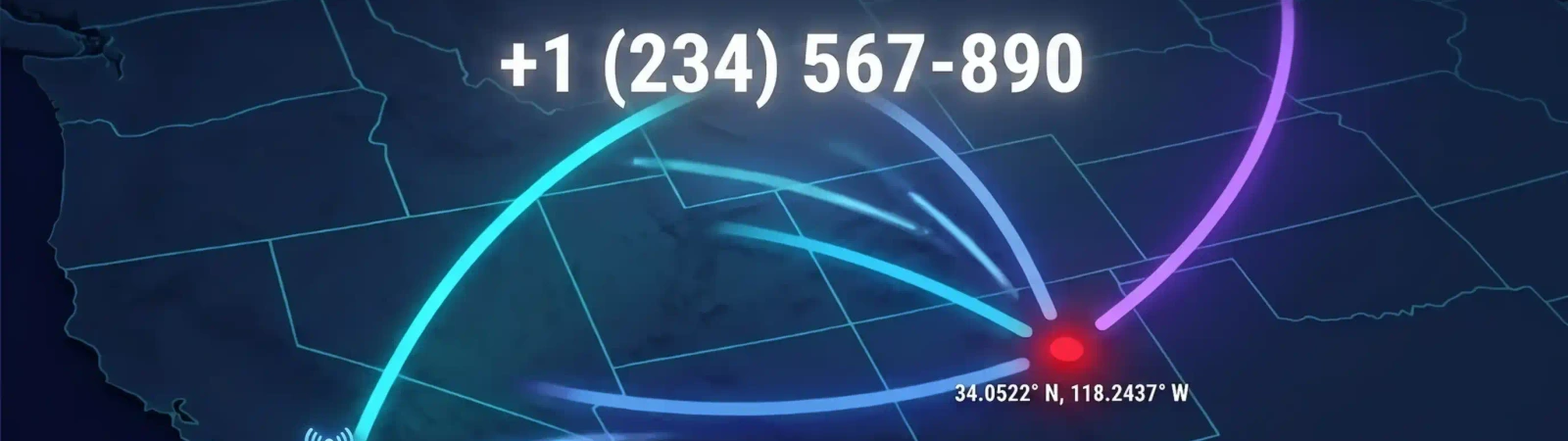
Nowadays, many people can’t imagine stepping out of the house without their phones, and that is useful for many OSINT investigations. A phone number cannot show where a device is right now: it mainly yields the registered region and carrier, and live location needs the owner’s consent or a legal request. Read this overview from Molfar and Minos to learn what a phone number can and cannot reveal.
Why You May Need to Find Location Using Phone Number
The task of tracking down a person based on their phone number info can be useful for different OSINT researches. You may belong to one of the following categories of people who need to reveal someone’s location using only a phone number, with a lawful basis or the person’s consent:
Businesses and Employers
The managers have practical uses for phone number-based location research. If you are managing field employees, such as delivery drivers or sales personnel, location sharing needs their informed consent and a legal basis, and a phone number alone cannot provide it. Moreover, fraud prevention measures can be strengthened by verifying the authenticity of clients and transactions through location tracking.
Private Investigators
You can leverage the capacity to track a phone number for a wide range of services in the private investigations business. For instance, locating missing persons, whether they are runaways or individuals who have simply lost touch with their families, is another common task for private investigators. Background checks also benefit from this capability, allowing pros to verify the addresses and locations of the subjects they are researching.
Journalists and Media
OSINT by phone number can be a go-to method for location-focused media investigations. Tracing sources or individuals relevant to the stories and reports is a fundamental part of the process. Moreover, gathering accurate information on subjects for research purposes often requires knowing their current location.
Legal Experts
Locating individuals who owe money or need to be served legal documents can be challenging without accurate location information. That’s why, if you are employed within the field of law, you can effectively utilize location tracking in a work practice.
Personal Interest
Even if you don’t need to track a phone number for your work responsibilities, it might be useful to find someone’s location for private purposes. There are a few widespread scenarios:
- Security. One common reason is personal safety. For instance, if you lose your phone or it gets stolen, being able to track its location can help you recover it quickly.
- Network. By using phone number tracking, you can locate old friends or distant relatives and re-establish connections.
- Family Protection. You can find location using phone number to be aware about the security of your children, elderly relatives or other family members who require special care, with their knowledge and consent where possible.
- Verification. Benefit from the phone number OSINT to prove the authenticity of someone's identity, especially if you are engaged in online dating, to avoid scammers.
Tools for Finding Location Clues From a Phone Number
Find Location Clues With Minos Profiler
Minos Profiler's reverse phone lookup analyzes diverse open-source registers and provides comprehensive data about the caller or SMS sender — for instance, the owner's name, social media accounts, family and relatives, and physical location based on the area code. If a phone number match is detected, you may get a Search Profile report with clues about the location, real identity, social media links, contact info, etc.
Pros
Request a demo to see how phone lookups fit your team's plan and usage.
Cons
The target of the investigation might not be featured in the providers’ databases, so the search success can be limited if the person has cleaned up their digital footprint.
What to Do After You Pinpoint Anyone’s Location Using Their Phone Number
You’ve received clues about the target’s location but are unsure what to do next? Here are a few tips to take into account before proceeding with the search. Continue only with a lawful purpose and, where required, the person’s consent:
- Double-Check Accuracy. Confirm the location details to ensure they are correct and up-to-date with a few OSINT apps. This reduces the risk of acting on inaccurate information.
- Cross-Reference With Socials. If you have the person of interest’s social media links, use this source to verify the location guesses. Check whether their public profiles on platforms like Facebook, Instagram, and X are consistent with the location.
- Hire a Pro. If you have looked up everything you could to find location using phone number but need even more details, consider getting help from professional investigators.
- Look Up the Legalities. Be aware of the risks within the law surrounding location tracking in your jurisdiction. Unauthorized tracking can lead to legal consequences.
The Challenges to Detect Location by Phone Number
However, when you are attempting to find location using phone number, be aware that a lot of things can go wrong. If your investigation is stuck and you can’t pinpoint the reason why, consider the following common complications with the searches:
- Location Fallacy. Phone numbers often reflect the region where the number was registered, not the current location of the device. For example, a mobile phone number might indicate a user is from New York, but the user could be traveling anywhere in the world.
- Tech Issues. The accuracy of location data can depend on the type of network, such as 3G or 5G, and the infrastructure available. Rural or less developed areas may have fewer cell towers, which reduces the location accuracy and makes it harder to look up a phone number.
- Faulty Hardware. Not all devices and networks support advanced location services. If the target has an older phone, it might be more challenging to find location using phone number. Furthermore, be aware that the tracking app drains the battery of the device which further complicates the search.
- Legal Concerns. Laws such as the California Consumer Privacy Act in the US and the GDPR in the EU impose strict rules on collecting, processing, and sharing location data, and covertly tracking a person can be a crime in its own right. Thus, you should avoid crossing the line of unlawful behavior when you intend to track a phone number. Different countries and states have varying regulations regarding the access and use of location data, complicating efforts to trace international users.
How to Find Out Whether Someone Tracks a Phone Number?
Do you suspect that someone is trying to lay hands on your personal info or track down your device? If you believe a partner or former partner is tracking you, contact the police or a local victim-support organization. Pay attention to these clues that point out whether you are under an investigation:
- Look for any unfamiliar apps that you didn’t install. These could be spyware or tracking apps.
- If your phone’s battery is draining faster than usual, it might indicate that a tracking app or service is running in the background to track a phone number.
- Check your data usage in your phone’s settings to see if any app is using an unusual amount of data. Review which apps have permission to access your location to secure yourself.
- If your phone is consistently warm, even when not in use, it could be a sign of the unknown activity related to tracking.
- Install a reputable anti-spyware or security app that can scan your phone for malicious software. For example, the Malwarebytes app can help you take note of suspicious activity on your device. Ensure your phone’s operating system and apps are up to date to protect against vulnerabilities.
- Use two-factor authentication on your accounts to add an extra layer of safety in case you are under someone’s tracking investigation. It’s a simple measure to prevent a system breakthrough at no cost.
- Protect yourself from the potential danger. For example, do not connect to unsecured or unknown Wi-Fi networks that could expose your phone to tracking. Also, avoid clicking on suspicious links or downloading apps from unknown sources. Enable a strong password, PIN, or biometric security on your phone to make the system penetration much harder.
Conclusion
No matter whether you attempt to find location using phone number, track a phone number or want to safeguard yourself from being exposed, consult this guide to facilitate the investigation. Use the insights from Molfar and Minos to learn what a phone number can reveal, or to protect yourself from being tracked down without your consent.
This Signal Sits Inside the Minos Workflow
Watch
Detects relevant activity across configured sources and preserves the original evidence.
Explore →Risk
Assesses how serious the signal is and identifies what requires attention first.
Explore →Investigate
Uses Minos Profiler to quickly build a structured identity and risk profile from a known identifier.
Explore →Research
Adds analyst-led investigation when the available information is not enough to answer the wider question.
Explore →Response
Coordinates response plans with clear ownership, timing, and execution tracking.
Explore →See what Minos surfaces in your own information space
A 30-minute briefing on your own risk landscape — no slides, real data.